Overview
Tonsils
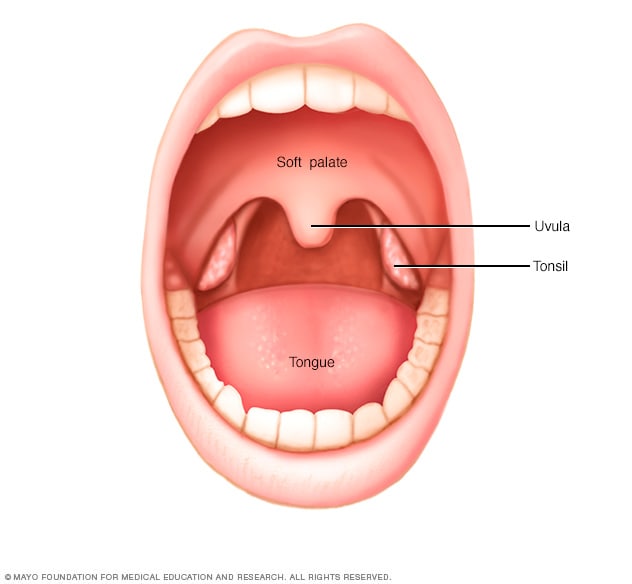
Tonsils
The tonsils are two oval-shaped pads in the back of the mouth. The tonsils are part of the body's germ-fighting immune system.
Tonsil cancer is a growth of cells that starts in a tonsil. The tonsils are two oval-shaped pads in the back of the mouth. They help the immune system fight germs.
Tonsil cancer can cause difficulty swallowing. It may make it feel like something is caught in the throat. Tonsil cancer is often diagnosed late in the disease. Often, the cancer has spread to nearby areas, such as the lymph nodes in the neck.
Tonsil cancer is considered a kind of throat cancer. Tonsil cancer happens in the part of the throat that's behind the mouth, called the oropharynx. Cancer that starts in this part of the throat is sometimes called oropharyngeal cancer.
Treatments for tonsil cancer include surgery, radiation therapy and chemotherapy.
Symptoms
Signs and symptoms of tonsil cancer include:
- Difficulty swallowing.
- A sensation that something is caught in the back of the throat.
- Swelling and pain in the neck.
- Earache.
- Jaw stiffness.
When to see a doctor
Make an appointment with a doctor, dentist or other healthcare professional if you have any symptoms that worry you.
Causes
HPV and throat cancer
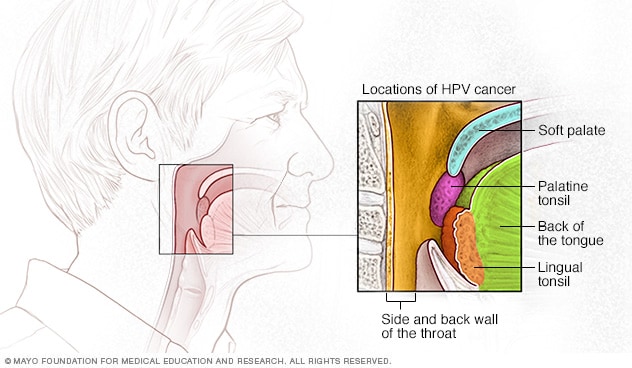
HPV and throat cancer
Human papillomavirus (HPV) is a common infection that's passed through sexual contact. It increases the risk of certain types of throat cancer. HPV has been linked to cancer that affects the soft palate, tonsils, back of the tongue, and the side and back wall of the throat.
Tonsil cancer happens when cells in the tonsils develop changes in their DNA. A cell's DNA holds the instructions that tell a cell what to do. In healthy cells, the DNA gives instructions to grow and multiply at a set rate. The instructions tell the cells to die at a set time. In cancer cells, the changes give different instructions. The changes tell the cancer cells to make many more cells quickly. Cancer cells can keep living when healthy cells would die. This causes too many cells.
The cancer cells might form a mass called a tumor. The tumor can grow to invade and destroy healthy body tissue. In time, cancer cells can break away and spread to other parts of the body. When cancer spreads, it's called metastatic cancer.
It's not always clear what causes the DNA changes that lead to tonsil cancer. For many tonsil cancers, human papillomavirus is thought to have a part. Human papillomavirus, also called HPV, is a common virus that's passed through sexual contact. For most people, HPV doesn't cause any problems. For others, it causes changes in the cells that may one day lead to cancer. Tonsil cancer caused by HPV tends to occur at a younger age and is more likely to respond well to available treatments.
Risk factors
Factors that may increase the risk of tonsil cancer include:
Using tobacco
All forms of tobacco increase the risk of tonsil cancer. This includes cigarettes, cigars, pipes, chewing tobacco and snuff.
Drinking alcohol
Frequent and heavy drinking increases the risk of tonsil cancer. Using alcohol and tobacco together increases the risk even more.
Being exposed to human papillomavirus
Human papillomavirus, also called HPV, is a common virus that's passed through sexual contact. For most people, it causes no problems and goes away on its own. For others, it causes changes in the cells that can lead to many types of cancer, including tonsil cancer.
Prevention
Things that can help lower the risk of tonsil cancer include making healthy choices and having regular checkups. To lower your risk of tonsil cancer:
Don't use tobacco
If you don't use tobacco, don't start. If you currently use tobacco of any kind, talk with your healthcare professional about strategies to help you quit.
Limit alcohol if you choose to drink
If you choose to drink alcohol, do so in moderation. For healthy adults, that means up to one drink a day for women and up to two drinks a day for men.
Have regular health and dental exams
During your appointments, your dentist, doctor or other healthcare professional can check your mouth for signs of cancer and precancerous changes.
Consider the HPV vaccine
A vaccine can help prevent infection with human papillomavirus, also called HPV. HPV infection raises the risk of tonsil cancer and other cancers. Receiving a vaccination to prevent HPV infection may reduce the risk of HPV-related cancers. Ask your healthcare professional whether the HPV vaccine is right for you.
Nov. 27, 2024