Overview
Parts of the immune system
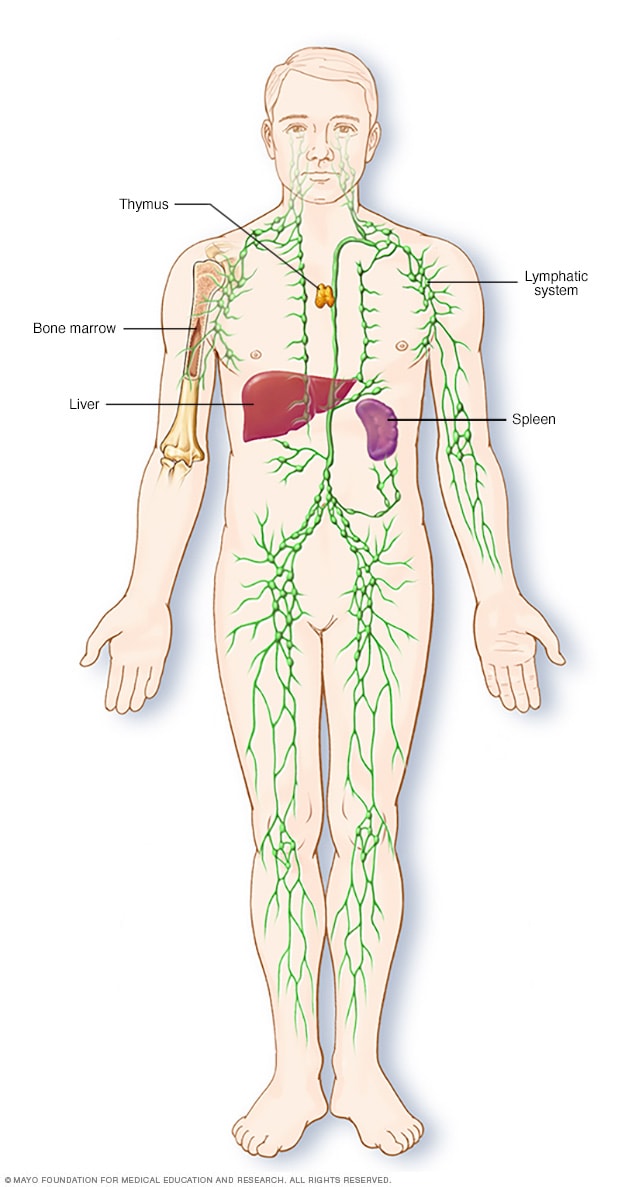
Parts of the immune system
The lymphatic system is part of the body's immune system, which protects against infection and disease. The lymphatic system includes the spleen, thymus, lymph nodes and lymph channels, as well as the tonsils and adenoids.
Splenectomy is surgery to remove the spleen. The spleen is an organ that sits under the rib cage on the upper left side of the belly. It helps fight infection and filters material the body doesn't need, such as old or damaged blood cells, from the blood.
The most common reason for splenectomy is to treat a spleen that tears, called a ruptured spleen. A belly injury often is the cause of the tear.
Splenectomy also treats other conditions. Conditions may include an enlarged spleen that is causing discomfort, called splenomegaly. Other conditions include some blood conditions, certain cancers, infection, and cysts or tumors that aren't cancer.
Surgeons most often do splenectomies using a tiny video camera and special surgical tools. This is called laparoscopic splenectomy. People who have this type of surgery may be able to leave the hospital the same day and recover fully in two weeks.
Why it's done
Splenectomy may treat many conditions. Your healthcare professional may suggest splenectomy if you have one of the following:
- Ruptured spleen. A spleen can tear due to an injury to the belly or because the spleen gets larger, called splenomegaly. The rupture can cause life-threatening bleeding inside the body.
- Enlarged spleen. Splenectomy may be done to ease the symptoms of a spleen that's too large. Symptoms may include pain and a feeling of fullness.
- Blood condition. Splenectomy may treat blood conditions such as idiopathic thrombocytopenic purpura, polycythemia vera and thalassemia. But with these conditions, splenectomy most often comes after other treatments have failed to ease symptoms.
- Cancer. Splenectomy may treat cancers including chronic lymphocytic leukemia, Hodgkin lymphoma, non-Hodgkin lymphoma and hairy cell leukemia.
- Infection. Having a serious infection or a large amount of pus, called an abscess, in the spleen may be a cause of spleen removal if other treatments don't help.
- Cyst or tumor. People who have cysts or tumors that aren't cancer inside the spleen may need splenectomy. This may be true if the cyst or tumor gets large or is hard to remove all the way.
A healthcare professional also may remove a spleen to help diagnose a condition. This might happen if a spleen is too large without a known cause.
Risks
Splenectomy most often is safe. But as with any surgery, splenectomy may cause complications, including:
- Bleeding.
- Blood clots.
- Infection.
- Injury to nearby organs, including the stomach, pancreas and colon.
Long-term risk of infection
People who have their spleens removed are more likely to get serious or life-threatening infections. They may need vaccines for pneumonia, Haemophilus influenzae type b, also called Hib, and meningococci. And they may need to take antibiotics to prevent infections.
How you prepare
Food and medications
Before your procedure, you may need to stop taking certain medicines and supplements for a time. You also may need to not eat or drink for a time. A member of your healthcare team tells you how to prepare.
Other precautions
If you have time before the surgery, you may need to get blood transfusions. This is to make sure that you have enough blood cells after your spleen is removed.
Your healthcare team also may ask that you get a pneumococcal vaccine and possibly other vaccines to help prevent infection after your spleen is removed.
What you can expect
Before the procedure
Right before your surgery, you get a medicine to put you in a sleeplike state, called a general anesthetic. A healthcare professional called an anesthesiologist or an anesthetist gives you the medicine as a gas to breathe through a mask or as a liquid that goes into a vein.
The surgical team puts heart monitor leads on your chest and a blood pressure cuff on your arm. That way the team can watch your heart rate, blood pressure and blood oxygen throughout the procedure.
During the procedure
Your surgeon does the surgery using either a minimally invasive, called laparoscopic, or an open procedure. The method used often depends on the size of the spleen. The larger the spleen, the more likely your surgeon does an open splenectomy.
-
Laparoscopic splenectomy. During laparoscopic splenectomy, the surgeon makes four small cuts, called incisions, in your belly. The surgeon then puts a tube with a tiny video camera into your belly through one of the cuts.
Your surgeon watches the video images and removes the spleen with special surgical tools that are put in the other three incisions. Then the surgical team closes the incisions.
Not everyone can have a laparoscopic splenectomy. A ruptured spleen most often needs an open splenectomy. Sometimes, a surgeon may begin with a laparoscopic approach and then need to make a larger incision. This might be because of scar tissue from past operations or other complications.
- Open splenectomy. During open splenectomy, the surgeon makes a cut, called an incision, in the middle of the belly. The surgeon then removes the spleen and closes the incision.
After the procedure
- In the hospital. After surgery, you go to a recovery room. If you had laparoscopic surgery, you may go home the same day or the day after. If you had open surgery, you may be able to go home after 2 to 6 days.
- After you go home. Talk with your healthcare team about how long to wait before going back to your daily activities. If you had laparoscopic surgery, it may be two weeks. After open surgery, it may be six weeks.
Results
If you had splenectomy because your spleen tore, you don't need more treatment. If you had it to treat another condition, you may need more treatment.
Life without a spleen
After splenectomy, other organs in the body take over most of the work of the spleen. People without a spleen can be active. But they're at a higher risk of getting sick or getting serious infections. This risk is highest shortly after surgery. People without a spleen also may have a harder time getting better after an illness or injury.
To lower your risk of infection, your healthcare team may ask you to get vaccines. Besides an annual flu shot, you may need to be vaccinated for pneumonia, Haemophilus influenzae type b, also called Hib, and meningococci.
You also may take antibiotics to prevent illness. Antibiotics are mainly for children under 5 and people who have other conditions that raise the risk of serious infections.
After splenectomy, call your healthcare professional at the first sign of an infection, such as:
- A fever of 101 degrees Fahrenheit (38.3 degrees Celsius) or higher.
- A change in skin color or tender spots anywhere on your body.
- A sore throat.
- Chills that cause you to shake or shiver.
- A cold that lasts longer than most colds do.
Make sure anyone caring for you knows that you've had your spleen removed. You might wear a medical alert bracelet that tells others that you don't have a spleen.
Dec. 13, 2025