Small bowel cancer Symptoms and causes
Overview
Small bowel cancer is a type of cancer that starts as a growth of cells in the small intestine. The small intestine, also called the small bowel, is a long tube that carries digested food between the stomach and the large intestine.
The small intestine digests and absorbs nutrients from the foods you eat. It produces hormones that help with digestion. The small intestine also plays a role in the body's germ-fighting immune system. It contains cells that fight bacteria and viruses that enter the body through the mouth.
Small bowel cancer treatment usually involves surgery to remove the cancer. Other treatments include chemotherapy and targeted therapy, which use medicines to kill cancer cells. Radiation therapy also may be used to shrink the cancer before surgery.
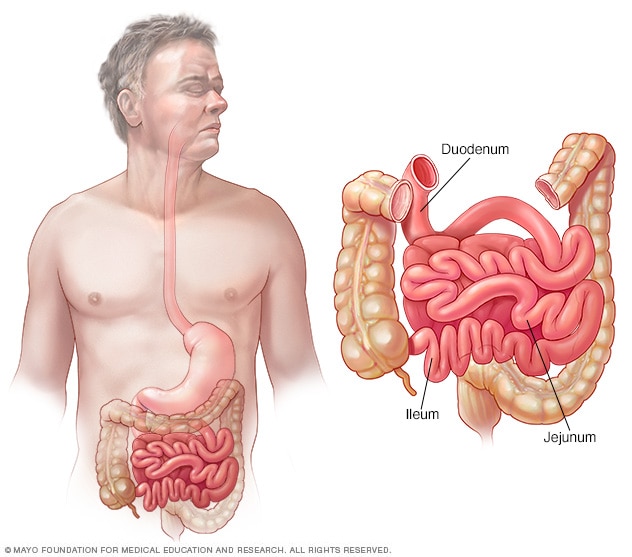
Small intestine
Capsule endoscopy is often used to see the inside of the small intestine. The small intestine has three sections — the duodenum, jejunum and ileum. It runs from the stomach to the large intestine.
Symptoms
Symptoms of small bowel cancer include:
- Abdominal pain.
- Yellowing of the skin and the whites of the eyes, called jaundice.
- Feeling very weak or tired.
- Nausea.
- Vomiting.
- Losing weight without trying.
- Blood in the stool, which might look red or black.
- Watery diarrhea.
- Skin flushing.
Causes
The cause of small bowel cancer isn't known. What's known is that something happens to cells in the small bowel that changes them into cancer cells.
Small bowel cancer happens when cells develop changes in their DNA. A cell's DNA holds the instructions that tell the cell what to do. The changes tell the cells to multiply quickly. The cells continue living when healthy cells would die as part of their natural life cycle. This causes too many cells. The cells might form a mass called a tumor. The cells can invade and destroy healthy body tissue. In time, the cells can break away and spread to other parts of the body.
Types of small bowel cancer
The type of small bowel cancer you have is based on the type of cell where your cancer began. Examples of small bowel cancer types include:
- Adenocarcinoma. Adenocarcinoma is the most common type of small bowel cancer. Adenocarcinoma starts in the gland cells that make mucus.
- Neuroendocrine tumors. Neuroendocrine tumors are cancers that start in the neuroendocrine cells. Neuroendocrine cells are found in many places in the body. They do some nerve cell functions and some of the work of cells that make hormones.
- Lymphoma. Lymphoma is a cancer that starts in immune system cells. The body's immune system fights germs. Immune system cells in the small intestine fight bacteria and viruses that enter the body through the mouth. Most lymphomas in the small bowel are a type of non-Hodgkin's lymphoma.
- Soft tissue sarcoma. Soft tissue sarcomas are cancers that start in the body's connective tissues. One type of soft tissue sarcoma is a gastrointestinal stromal tumor, also known as GIST. GIST starts in special nerve cells that are found in the wall of the small bowel.
Your health care team considers your type of small bowel cancer when creating a treatment plan.
Risk factors
Factors that may increase the risk of small bowel cancer include:
- DNA changes that run in families. Some DNA changes that are passed down from your parents can increase your risk of small bowel cancer and other cancers. Examples include Lynch syndrome, familial adenomatous polyposis, also called FAP, and Peutz-Jeghers syndrome.
- Other bowel diseases. Other diseases and conditions that affect the intestines may increase the risk of small bowel cancer. These may include Crohn's disease, inflammatory bowel disease and celiac disease.
- Weakened immune system. If your body's germ-fighting immune system is weakened, you may have an increased risk of small bowel cancer. Examples include people with HIV infection and those who take medicine to control the immune system after an organ transplant.
- What you eat and drink. Some studies have found a higher risk of small bowel cancer in those who eat and drink certain things. For example, the risk seems to be associated with drinking alcohol and eating a diet that's low in fiber and high in red meat, sugar, and salt-cured and smoked foods.
Get Mayo Clinic cancer expertise delivered to your inbox.
Complications
Small bowel cancer can cause complications, including:
- An increased risk of other cancers. People who have small bowel cancer run a higher risk of having other types of cancers. These may include those that affect the colon, rectum, ovaries and the lining of the uterus, called the endometrium.
- Cancer that spreads to other parts of the body. Advanced small bowel cancer can spread to other parts of the body. When cancer spreads, it's called metastatic cancer. Small bowel cancer most often spreads to the liver.
Prevention
It's not clear what may help to reduce the risk of small bowel cancer. If you're interested in reducing your risk of cancer in general, it may help to:
- Eat a variety of fruits, vegetables and whole grains. Fruits, vegetables and whole grains contain vitamins, minerals, fiber and antioxidants, which may help reduce your risk of cancer and other diseases. Choose a variety of fruits and vegetables so that you get different vitamins and nutrients.
- Drink alcohol in moderation, if at all. If you choose to drink alcohol, do so in moderation. For healthy adults, that means up to one drink a day for women and up to two drinks a day for men.
- Stop smoking. Talk to a health care professional about ways to quit that may work for you.
- Exercise most days of the week. Try to get at least 30 minutes of exercise on most days. If you've been inactive, start slowly and build up gradually to 30 minutes. Also, talk to your health care team before starting any exercise program.
- Maintain a healthy weight. If you are at a healthy weight, work to maintain your weight by combining a healthy diet with daily exercise. If you need to lose weight, ask your health care team about healthy ways to achieve your goal. Aim to lose weight slowly by increasing the amount of exercise you get and reducing the number of calories you eat.

CON-20167637
Mayo Clinic does not endorse companies or products. Advertising revenue supports our not-for-profit mission.
Advertising & Sponsorship
Mayo Clinic Press
Check out these best-sellers and special offers on books and newsletters from Mayo Clinic Press.
