Overview
Mesentery
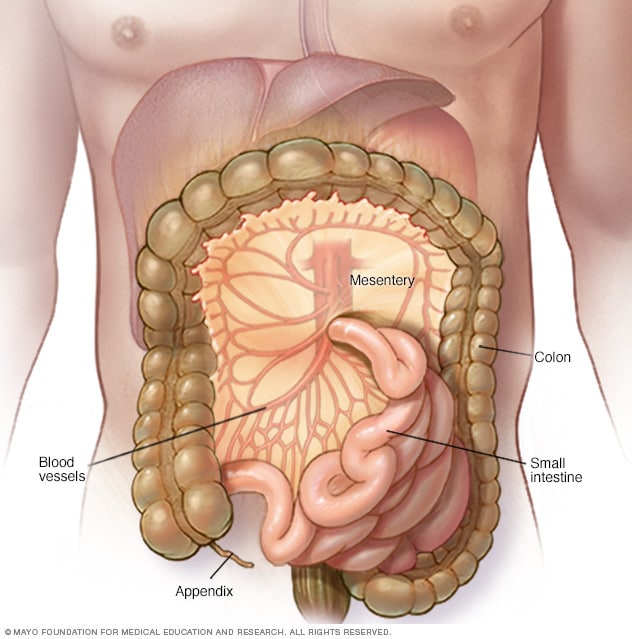
Mesentery
The mesentery is tissue that attaches the small intestine and colon to the back wall of the belly cavity. The mesentery also houses blood vessels and nerves that serve these organs and holds immune system tissues called lymph nodes.
Sclerosing mesenteritis is an uncommon condition in which the tissue that holds the intestines in place becomes inflamed and forms scar tissue. This tissue is called the mesentery (mez-un-TER-ee). It's not clear what causes sclerosing mesenteritis (skluh-ROHS-ing MEZ-un-tuh-rie-tis).
Sclerosing mesenteritis can cause belly pain, weight loss, diarrhea, constipation and other symptoms. But many people experience no symptoms and may never need treatment.
In rare cases, scar tissue formed by sclerosing mesenteritis can block food from moving through the digestive tract. In this case, you may need surgery.
The condition goes by other names, including mesenteric panniculitis (puh-NIK-u-lie-tis) and misty mesentery.
Products & Services
Symptoms
Symptoms of sclerosing mesenteritis may include:
- Belly pain or tenderness.
- Bloating.
- Diarrhea.
- Constipation.
- Upset stomach and vomiting.
- Unintended weight loss.
- Fever.
Many people with sclerosing mesenteritis have no symptoms.
When to see a doctor
Many conditions can cause belly pain, weight loss and other symptoms of the digestive system. It's important to see your healthcare professional if you have symptoms that don't improve with self care and rest for a few days.
See your health professional if you have unintended weight loss.
Risk factors
Sclerosing mesenteritis is most often diagnosed in people in their 50s or 60s.
People with a history of the following conditions may be at increased risk of sclerosing mesenteritis:
- Belly surgery.
- Traumatic injury to the belly.
- Cancer or other diseases in the belly.
- Conditions called autoimmune diseases that result in the immune system attacking the body's own tissue.
Complications
Some people with sclerosing mesenteritis develop complications, including:
- Blockage or irregular movement of waste in the small intestine.
- Decreased blood flow to the small intestine.
- Blood clots in the main blood vessel to the mesentery.
- Blockage of the lymphatic system in the belly.
- Kidney failure or other conditions of the urinary system.
Causes
The cause of sclerosing mesenteritis is not known.
The mesentery is one of the tissues lining the belly cavity. It is found at the back of the belly cavity. The purpose of the mesentery is to:
- Attach the small intestine and colon to the back wall of the belly cavity.
- House blood vessels and nerves that serve the small intestine and colon.
- Hold immune system tissues called lymph nodes and lymph vessels.
- Store fat cells that help regulate nutritional balance in the body.
Sclerosing mesenteritis happens when the mesentery becomes inflamed and forms scar tissue. Inflammation is typically the immune system's reaction to disease or injury. An inflammatory reaction increases blood flow, releases proteins that regulate cells' defenses and delivers disease-fighting cells. Inflammation is usually a part of a healing process. Long-term inflammation damages tissues.
What causes long-term inflammation in sclerosing mesenteritis is not known. Scar tissue from the inflammation usually appears as a single, relatively large mass. Sometimes there are multiple smaller clusters of scar tissue.