Retinal diseases Symptoms and causes
Overview
Retinal diseases vary widely, but most of them cause visual symptoms. Retinal diseases can affect any part of your retina, a thin layer of tissue on the inside back wall of the eye.
The retina contains millions of light-sensitive cells, called rods and cones, and other nerve cells that receive and organize visual information. The retina sends this information to the brain through the optic nerve, enabling you to see.
Treatment is available for some retinal diseases. Depending on your condition, treatment goals may be to stop or slow the disease. This may help preserve, improve or restore your vision. Untreated, some retinal diseases can cause severe vision loss or blindness.
Types
Common retinal diseases and conditions include:
- Retinal tear. A retinal tear occurs when the clear, gel-like substance in the center of your eye, called vitreous, shrinks and tugs on the thin layer of tissue lining the back of your eye, called the retina. This can cause a tear in the retinal tissue. It's often accompanied by the sudden onset of symptoms such as floaters and flashing lights.
- Retinal detachment. A retinal detachment is defined by the presence of fluid under the retina. This usually occurs when fluid passes through a retinal tear, causing the retina to lift away from the underlying tissue layers.
- Diabetic retinopathy. If you have diabetes, the tiny blood vessels in the back of your eye can deteriorate and leak fluid into and under the retina. This causes the retina to swell, which may blur or distort your vision. Or you may develop new, irregular capillaries that break and bleed. This also worsens your vision.
- Epiretinal membrane. Epiretinal membrane is a delicate tissue-like scar or membrane that looks like crinkled cellophane lying on top of the retina. This membrane pulls up on the retina, which distorts your vision. Objects may appear blurred or crooked.
- Macular hole. A macular hole is a small defect in the center of the retina at the back of the eye, called the macula. The hole may develop from atypical traction between the retina and the vitreous, or it may follow an injury to the eye.
- Macular degeneration. In macular degeneration, the center of the retina begins to deteriorate. This causes symptoms such as blurred central vision or a blind spot in the center of the visual field. There are two types — wet macular degeneration and dry macular degeneration. Many people will first have the dry form, which can progress to the wet form in one or both eyes.
- Retinitis pigmentosa. Retinitis pigmentosa is an inherited degenerative disease. It slowly affects the retina and causes loss of night and side vision.
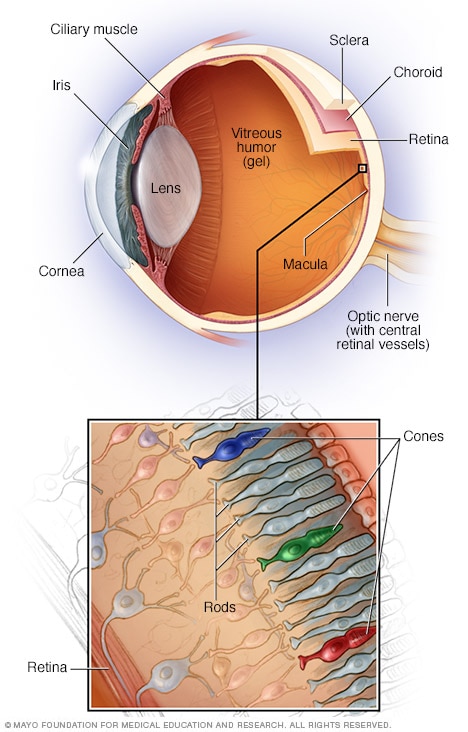
Parts of the eye
The macula is located at the back of the eye in the center of the retina. A healthy macula allows for clear central vision. The macula is made up of densely packed light-sensitive cells called cones and rods. Cones give the eye color vision, and rods let the eye see shades of gray.
Mayo Clinic Health Letter & Books
Join thousands of readers who trust Mayo Clinic Health Letter for reliable health tips and insights. Start your journey to better health today.
Symptoms
Many retinal diseases share some common symptoms. These may include:
- Seeing floating specks or cobwebs.
- Blurred or distorted vision in which straight lines can look wavy.
- Defects in the side vision.
- Vision loss.
You may need to try looking with each eye alone to notice these changes.
When to see a doctor
It's important to pay attention to any changes in your vision and find care quickly. Seek immediate medical attention if you suddenly have floaters, flashes or reduced vision. These are warning signs of potentially serious retinal disease.
Risk factors
Risk factors for retinal diseases might include:
- Aging.
- Smoking.
- Being obese.
- Having diabetes or other diseases.
- Eye trauma.
- A family history of retinal diseases.
CON-20257378
Mayo Clinic does not endorse companies or products. Advertising revenue supports our not-for-profit mission.
Advertising & Sponsorship
Mayo Clinic Press
Check out these best-sellers and special offers on books and newsletters from Mayo Clinic Press.
