Liposarcoma Symptoms and causes
Overview
Liposarcoma is a rare type of cancer that starts in the fat cells. It most often begins as a growth of cells in the belly or in the arm and leg muscles. But liposarcoma can begin in the fat cells anywhere in the body.
Liposarcoma happens most often in older adults, but it can happen at any age.
Liposarcoma treatment usually involves surgery to remove the cancer. Other treatments, such as radiation therapy, also may be used.
Liposarcoma is a type of cancer called a soft tissue sarcoma. These cancers happen in the body's connective tissues. There are many types of soft tissue sarcoma.
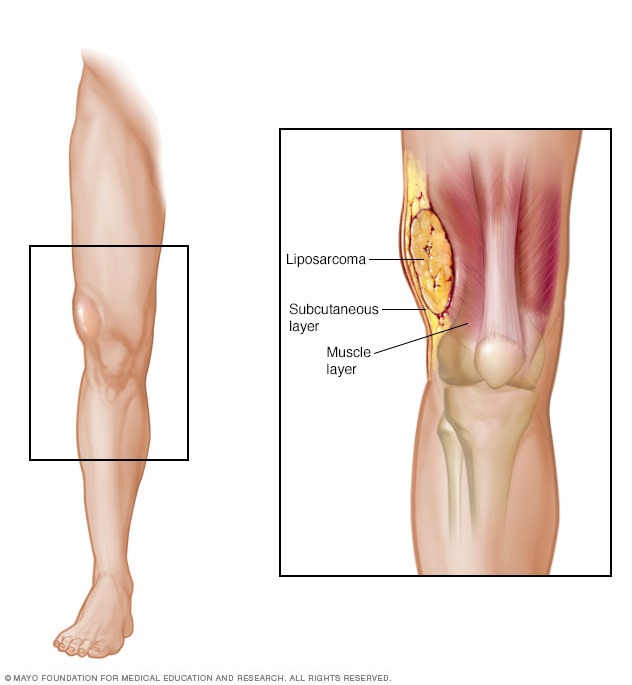
Liposarcoma
Liposarcoma is a type of cancer that starts in the fat cells. It happens most often in the muscles of the limbs or the abdomen.
Symptoms
Liposarcoma symptoms depend on the part of the body where the cancer forms.
Liposarcoma in the arms and legs can cause:
- A growing lump of tissue under the skin.
- Pain.
- Swelling.
- Weakness of the affected limb.
Liposarcoma in the belly, also called the abdomen, can cause:
- Abdominal pain.
- Abdominal swelling.
- Feeling full sooner when eating.
- Constipation.
- Blood in stool.
When to see a doctor
Make an appointment with a doctor or other health care professional if you have any symptoms that don't go away and that worry you.
Causes
It's not clear what causes liposarcoma.
Liposarcoma starts when fat cells get changes in their DNA. A cell's DNA holds the instructions that tell the cell what to do. The changes turn the fat cells into cancer cells. The changes tell the cancer cells to grow quickly and make a lot of extra cells. The cancer cells keep living when healthy cells would die as part of their natural life cycle.
The cancer cells form a growth, called a tumor. In some types of liposarcoma, the cancer cells stay put. They continue making more cells, causing the tumor to get bigger. In other types of liposarcoma, the cancer cells might break away and spread to other parts of the body. When cancer spreads to other parts of the body, it's called metastatic cancer.
Get Mayo Clinic cancer expertise delivered to your inbox.
CON-20304578
Mayo Clinic does not endorse companies or products. Advertising revenue supports our not-for-profit mission.
Advertising & Sponsorship
Mayo Clinic Press
Check out these best-sellers and special offers on books and newsletters from Mayo Clinic Press.
