Overview
Female urinary system
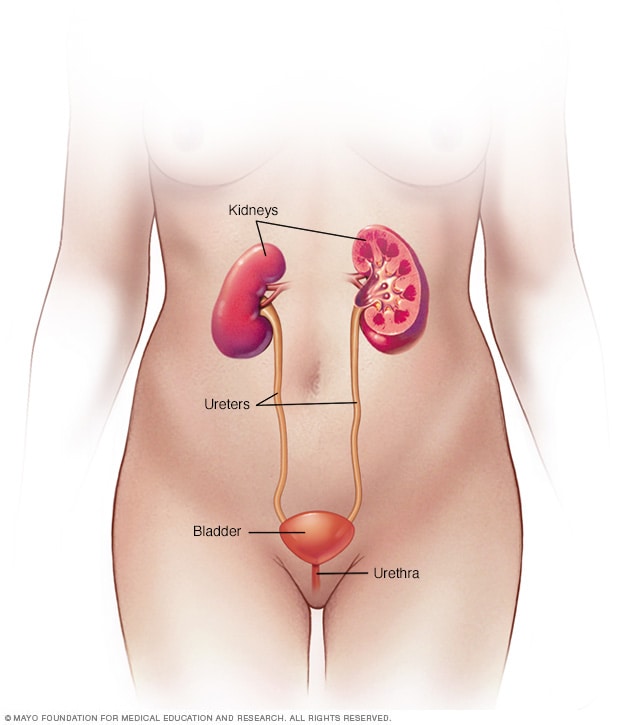
Female urinary system
The urinary system includes the kidneys, ureters, bladder and urethra. The urinary system removes waste from the body through urine. The kidneys sit toward the back of the upper abdomen. They filter waste and fluid from the blood and make urine. Urine moves from the kidneys to the bladder through narrow tubes called the ureters. The bladder stores urine until it's time to urinate. Urine leaves the body through a small tube called the urethra.
Male urinary system
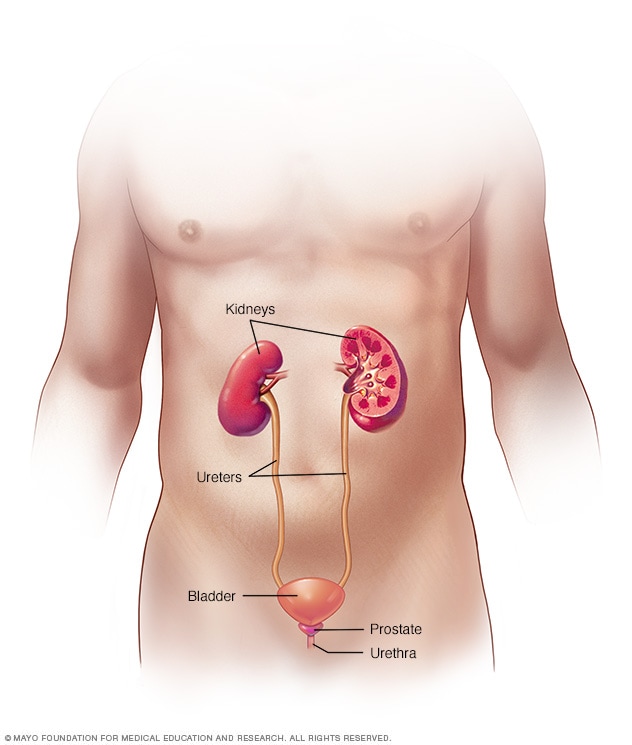
Male urinary system
The urinary system includes the kidneys, ureters, bladder and urethra. The urinary system removes waste from the body through urine. The kidneys sit toward the back of the upper abdomen. They filter waste and fluid from the blood and make urine. Urine moves from the kidneys through narrow tubes to the bladder. These tubes are called the ureters. The bladder stores urine until it's time to urinate. Urine leaves the body through a small tube called the urethra.
Kidney stones are hard objects made of minerals and salts in urine. They form inside the kidneys. You may hear healthcare professionals refer to kidney stones as renal calculi, nephrolithiasis or urolithiasis.
Kidney stones have various causes. These include diet, extra body weight, some health conditions, and some supplements and medicines. Kidney stones can affect any of the organs that make urine or remove it from the body — from the kidneys to the bladder. Often, stones form when the urine has less water in it. This lets minerals form crystals and stick together.
Passing kidney stones can be quite painful. But prompt treatment usually helps prevent any lasting damage. Sometimes, the only treatment needed to pass a kidney stone is taking pain medicine and drinking lots of water. Other times, surgery or other treatments may be needed. It depends on size, location and the type of stone you have.
If you've had more than one kidney stone, your healthcare professional can show you ways to prevent more. This may involve making diet changes, taking medicine or both.
Symptoms
Kidney stones
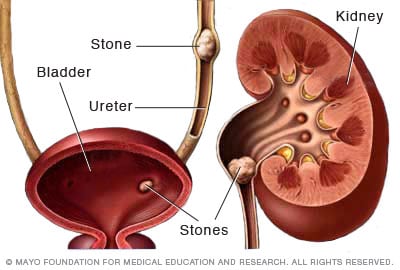
Kidney stones
Kidney stones form in the kidneys. Symptoms may start as stones move into the ureters. The ureters are thin tubes that let urine pass from the kidneys to the bladder. Symptoms of kidney stones can include serious pain, upset stomach, vomiting, fever, chills and blood in the urine.
A kidney stone usually doesn't cause symptoms until it moves around within the kidney or passes into one of the ureters. The ureters are the tubes that connect the kidneys and bladder.
If a kidney stone gets stuck in one of the ureters, it may block the flow of urine and cause the kidney to swell and the ureter to spasm. That can be very painful. At that point, you may have these symptoms:
- Serious, sharp pain in the side and back, below the ribs.
- Pain that spreads to the lower stomach area and groin.
- Pain that comes in waves and varies in how intense it feels.
- Pain or a burning feeling while urinating.
Other symptoms may include:
- Pink, red or brown urine.
- Cloudy or foul-smelling urine.
- A constant need to urinate, urinating more often than usual or urinating in small amounts.
- Upset stomach and vomiting.
- Fever and chills if an infection is present.
Pain caused by a kidney stone may change as the stone moves through your urinary tract. For instance, the pain may shift to a different part of the body or become more intense.
When to see a doctor
Make an appointment with your healthcare professional if you have any symptoms that worry you.
Get a healthcare checkup right away if you have:
- Pain so bad that you can't sit still or find a comfortable position.
- Pain along with upset stomach and vomiting.
- Pain along with fever and chills.
- Blood in your urine.
- Trouble passing urine.
Causes
Kidney stones often have no definite, single cause. But many factors may raise your risk.
Kidney stones develop when the urine contains more crystal-forming substances than the fluid in the urine can dilute. These substances include calcium oxalate, calcium phosphate and uric acid. At the same time, the urine may lack substances that prevent crystals from sticking together. That creates an ideal setting for kidney stones to form.
Types of kidney stones
Knowing the type of kidney stone you have helps your healthcare professional figure out its cause and the right treatment for you. This information also can give clues on how to prevent more kidney stones. If you can, try to save your kidney stone if you pass one. Then bring it to your healthcare professional, who can check on what type of kidney stone it is.
Types of kidney stones include:
-
Calcium stones. Most kidney stones are calcium stones. They're usually made of the chemical compound calcium oxalate. Oxalate is a substance made daily by the liver or absorbed from diet. Some fruits and vegetables, as well as nuts and chocolate, have high amounts of oxalate.
Dietary factors, high doses of vitamin D, intestinal bypass surgery and many conditions that affect metabolism can make calcium or oxalate more concentrated in urine.
Calcium stones also can be made of calcium phosphate. This type of stone is more common in metabolic conditions such as renal tubular acidosis. It also may be linked with some medicines for migraines or seizures such as topiramate (Topamax, Trokendi XR, others).
- Uric acid stones. Uric acid stones can form in people who lose too much fluid because of ongoing diarrhea or people who have trouble absorbing nutrients from food; those who eat a high-protein diet or lots of organ meats or shellfish; and those with diabetes mellitus or metabolic syndrome. Some genetic factors also may raise the risk of uric acid stones.
- Struvite stones. Struvite stones form in response to a urinary tract infection. These stones can grow quickly and become quite large, sometimes with few symptoms or little warning.
- Cystine stones. These stones form in people with a rare genetic condition called cystinuria that causes the kidneys to leak too much of a protein building block called cystine.
Risk factors
Factors that raise your risk of kidney stones include:
- Family or personal history. If someone in your family has had kidney stones, you're more likely to develop stones too. If you've already had one or more kidney stones, you're at higher risk of getting another.
- Dehydration. Not drinking enough water each day can raise your risk of kidney stones. People who live in warm, dry climates and those who sweat a lot may be at higher risk than others.
- Some diets. Eating a diet that's high in oxalate, protein, sodium and sugar may raise your risk of some types of kidney stones. This is especially true with a high-sodium diet. Too much sodium raises the amount of calcium the kidneys must filter. And that greatly raises the risk of kidney stones.
- Obesity. This complex disease involves having too much body fat, and it's been linked with a higher risk of kidney stones.
- Digestive diseases and surgery. Gastric bypass surgery, inflammatory bowel disease or ongoing diarrhea can cause changes in the digestive process. These changes affect how the body absorbs calcium and water. That in turn increases the amounts of stone-forming substances in the urine.
- Other health conditions such as renal tubular acidosis, cystinuria, hyperparathyroidism and repeated urinary tract infections also can raise the risk of kidney stones. A rare genetic condition called primary hyperoxaluria raises the risk of calcium oxalate stones.
- Some supplements and medicines. These include vitamin C, dietary supplements, overuse of laxatives, calcium-based antacids, and some medicines for migraines or depression.
Prevention
Prevention of kidney stones may include a mix of lifestyle changes and medicines.
Lifestyle changes
You may lower your risk of kidney stones if you:
-
Drink water throughout the day. This is the most important lifestyle change you can make. If you've had kidney stones before, your healthcare professional may tell you to drink enough fluids to pass about 2.1 quarts (2 liters) of urine a day or more. You may be asked to measure how much urine you pass to make sure that you're drinking enough water.
If you live in a hot, dry climate or you exercise often, you may need to drink even more water to produce enough urine. If your urine is light and clear, you're likely drinking enough water.
- Eat fewer oxalate-rich foods. If you tend to form calcium oxalate stones, your healthcare professional may recommend limiting foods rich in oxalates. These include rhubarb, beets, okra, spinach, Swiss chard, sweet potatoes, nuts, tea, chocolate, black pepper, sesame or tahini products, and soy products. Reviewing your diet with a dietitian with expertise in kidney stones is usually helpful.
- Choose a diet low in sodium and animal protein. Lower the amount of sodium you eat. And choose protein sources that don't come from meat or fish, such as legumes. Think about using a salt substitute to flavor foods.
-
Keep eating calcium-rich foods, but use caution with calcium supplements. Calcium in food doesn't have an effect on your risk of kidney stones. Keep eating calcium-rich foods unless your healthcare professional recommends otherwise.
Ask your healthcare professional before taking calcium supplements. These have been linked with a higher risk of kidney stones. You may lower the risk by taking supplements with meals. Diets low in calcium can make kidney stones more likely to form in some people.
Ask your healthcare professional to refer you to a dietitian. The dietitian can help you make an eating plan that lowers your risk of kidney stones.
Medications
Medicines can control the amount of minerals and salts in the urine. They may be helpful in people who form certain kinds of stones. The type of medicine that your healthcare professional prescribes depends on the kind of kidney stones you have. Here are some examples:
- Calcium stones. To help prevent calcium stones from forming, your healthcare professional may prescribe a thiazide diuretic or potassium citrate. If you have calcium oxalate stones due to the rare genetic condition primary hyperoxaluria, you may need other treatments to lower the amount of oxalate in your blood. Your healthcare professional may recommend that you take vitamin B6, also called pyridoxine. Or you may need prescription medicines such as lumasiran (Oxlumo) or nedosiran (Rivfloza).
- Uric acid stones. Your healthcare professional may prescribe allopurinol (Zyloprim, Aloprim, others) to lower uric acid levels in your blood and urine. You also may be prescribed potassium citrate. Sometimes, these medicines may dissolve existing uric acid stones.
- Struvite stones. To prevent struvite stones, your healthcare professional may recommend ways to keep your urine free of bacteria that cause infection. For instance, you may be told to urinate more often and to drink fluids to keep your urine flow good. Rarely, long-term use of antibiotics in small or occasional doses may help achieve this goal. For instance, your healthcare professional may suggest that you take an antibiotic before and for a while after surgery to treat your kidney stones. Medicines called acetohydroxamic acid also may help prevent struvite stones.
- Cystine stones. A diet that's lower in sodium and protein may help prevent cystine stones. Your healthcare professional also may recommend that you drink more fluids so that you urinate more. If those changes alone don't help, medicines called thiol drugs or other newer medicines also may be prescribed. They might make crystals less likely to form.