Focal segmental glomerulosclerosis (FSGS) Symptoms and causes
Overview
Focal segmental glomerulosclerosis (FSGS) is a disease in which scar tissue develops on the glomeruli, the small parts of the kidneys that filter waste from the blood. FSGS can be caused by a variety of conditions.
FSGS is a serious condition that can lead to kidney failure, which can only be treated with dialysis or kidney transplant. Treatment options for FSGS depend on the type you have.
Types of FSGS include:
- Primary FSGS. Many people diagnosed with FSGS have no known cause for their condition. This is called primary (idiopathic) FSGS.
- Secondary FSGS. Several factors, such as infection, drug toxicity, diseases including diabetes or sickle cell disease, obesity, and even other kidney diseases can cause secondary FSGS. Controlling or treating the underlying cause often slows ongoing kidney damage and might lead to improved kidney function over time.
- Genetic FSGS. This is a rare form of FSGS caused by genetic changes. It also is called familial FSGS. It's suspected when several members of a family show signs of FSGS. Familial FSGS can also occur when neither parent has the disease but each one carries a copy of an altered gene that can be passed on to the next generation.
- Unknown FSGS. In some cases, the underlying cause of FSGS cannot be determined despite the evaluation of clinical symptoms and extensive testing.
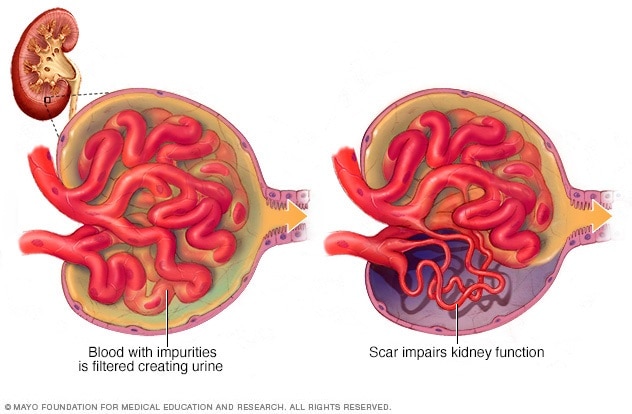
Typical and scarred glomeruli
Focal segmental glomerulosclerosis (FSGS) results from scar tissue that develops in the glomeruli. Glomeruli are tiny structures within the kidney that filter waste products from the blood to create urine. A healthy glomerulus is shown on the left. When scar tissue develops in a glomerulus, kidney function gets worse (shown right).
Symptoms
Symptoms of focal segmental glomerulosclerosis (FSGS) might include:
- Swelling, called edema, in the legs and ankles, around the eyes and in other body parts.
- Weight gain from fluid buildup.
- Foamy urine from protein buildup, called proteinuria.
When to see a doctor
See a healthcare professional if you have any of the symptoms of FSGS.
Causes
Focal segmental glomerulosclerosis (FSGS) can be caused by a variety of conditions, such as diabetes, sickle cell disease, other kidney diseases and obesity. Infections and damage from illicit drugs, medicines or toxins also can cause it. Gene changes passed through families, called inherited gene changes, can cause a rare form of FSGS. Sometimes there's no known cause.
Risk factors
Factors that can raise the risk of focal segmental glomerulosclerosis (FSGS) include:
- Medical conditions that can damage the kidneys. Certain diseases and conditions increase the risk of getting FSGS. These include diabetes, lupus, obesity and other kidney diseases.
- Certain infections. Infections that increase the risk of FSGS include HIV and hepatitis C.
- Gene changes. Certain genes passed through families can raise the risk of FSGS.
Complications
Focal segmental glomerulosclerosis (FSGS) may lead to other health concerns, also called complications, including:
- Nephrotic syndrome. This kidney condition causes the body to pass too much protein in the urine. Nephrotic syndrome raises the risk of other health conditions, such as blood clots and high blood pressure.
- Kidney failure. Damage to the kidneys that can't be fixed causes the kidneys to stop working. The only treatments for kidney failure are dialysis or kidney transplant.
CON-20208703
Mayo Clinic does not endorse companies or products. Advertising revenue supports our not-for-profit mission.
Advertising & Sponsorship
Mayo Clinic Press
Check out these best-sellers and special offers on books and newsletters from Mayo Clinic Press.
