Overview
Face lift
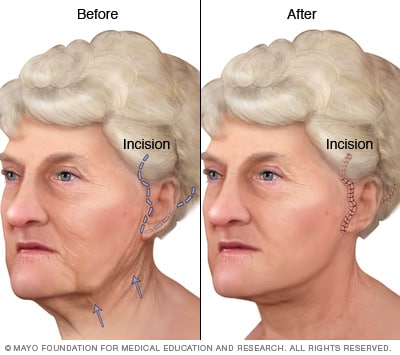
Face lift
During a face-lift, a surgeon lifts skin on each side of the face and tightens the deeper tissues. The surgeon then puts the skin back into place, tightens it and removes extra skin. This creates a smoother, more youthful look.
A face-lift is a surgical procedure to make the face look younger. The procedure can reduce sagging of the skin. It also can help smooth folds of skin on the cheeks and jawline. A face-lift also is called a rhytidectomy (rit-ih-Dek-tuh-me).
During a face-lift, a surgeon pulls back a flap of skin on each side of the face. The surgeon tightens tissues under the skin to give the face a more youthful shape. The surgeon then puts the skin back into place, tightens it and removes extra skin. This helps create a more youthful look.
People who have a face-lift often have a neck lift at the same time. This is to take out fat deposits and sagging on the neck.
A face-lift won't fix damage from being in the sun, such as fine lines in the skin. Other cosmetic procedures can help the skin.
Products & Services
Why it's done
The look and shape of the face change with age. The skin gets looser and doesn't snap back as easily when stretched. There's less fat in some areas of the face and more in others. This may cause the face to sag and look tired and heavy.
Age-related changes in the face that a face-lift may help include the following:
- Sagging in the cheeks.
- Too much skin at the lower jawline.
- Deep skin folds from the sides of the nose to the corners of the mouth.
- Sagging skin and extra fat in the neck if the procedure includes a neck lift.
A face-lift doesn't treat fine lines, sun damage, creases around the nose and upper lip, or changes in skin color.
Risks
Face-lift surgery can cause complications. Healing, medicine or surgery can manage some complications. Long-term or lifelong complications are rare, but they can cause changes in the look of the face.
Risks include:
- Hematoma. This is a buildup of blood under the skin that causes swelling and pressure. Hematoma is the most common complication of face-lift surgery. Hematomas most often form within 24 hours of surgery. Fast treatment with surgery can prevent damage to the skin and other tissues.
-
Scars. Scars from the cuts, called incisions, of a face-lift don't go away. But the hairline and shape of the face and ears most often hide them.
Rarely, the scars are raised. Shots of corticosteroid medicine or other treatments may help scars look better.
-
Nerve injury. Injury to nerves is rare. A nerve injury can affect feeling in the face or being able to move a muscle. This effect may be brief or lasting.
A brief loss of feeling or movement can last a few months to a year. Surgery may help.
- Hair loss. You might have brief or lasting hair loss around the surgical cuts. Surgery to transplant skin with hair follicles may help if the loss is lasting.
- Skin loss. Rarely, a face-lift can block the blood supply to facial tissues. This can cause skin loss and scarring. Wound care and medicines treat skin loss. If needed, a procedure can lessen scarring.
Like any other major surgery, a face-lift poses a risk of bleeding, infection and a bad reaction to the medicine that causes a sleeplike state, called anesthetic. Certain medical conditions or lifestyle habits also can raise the risk of complications.
The following factors may lead to complications or results you don't like. Or your surgeon may suggest that you not have a face-lift if:
-
You take blood-thinning medicines or supplements. These can keep blood from clotting well. They can raise the risk of hematomas after surgery.
These medicines include blood thinners such as warfarin (Coumadin) and clopidogrel (Plavix). Pain relievers such as aspirin and ibuprofen (Advil, Motrin IB, others), and supplements such as ginseng, Ginkgo biloba and fish oil also can keep blood from clotting well.
Your surgeon may tell you to stop taking blood-thinning medicines or supplements three weeks before surgery.
- You have certain medical conditions. If you have a condition that keeps blood from clotting, you won't be able to have a face-lift. Other conditions, such as poorly controlled diabetes or high blood pressure, may raise the risk of poor wound healing, hematomas or heart complications.
- You smoke. Smoking greatly raises the risk of poor wound healing, hematomas and skin loss after a face-lift.
- Your weight goes up and down. A history of repeated weight gain and loss can affect the shape of your face and condition of your skin. You may not be happy with the outcome of the surgery over time.
-
You take hormone replacement therapy. Taking hormones raises the risk of complications after surgery. These include having a blood clot form in a deep vein, called deep vein thrombosis or DVT.
The blood clot can break off and travel to the lungs. This is called a pulmonary embolism, which can be fatal. Your surgeon may ask you to stop taking hormone replacement therapy three weeks before surgery.
How you prepare
You start by talking to a plastic surgeon about a face-lift. The visit may include:
-
Medical history and exam. Be ready to answer questions about past and current medical conditions and surgeries you've had. Tell your surgeon about other plastic surgeries and cosmetic treatments, such as fillers and onabotulinumtoxinA (Botox). Tell your surgeon about complications from other surgeries and your history of smoking and drug or alcohol use.
Your surgeon does a physical exam and may ask for records from your other healthcare professionals. Your surgeon also may ask you to see a specialist if there are concerns about whether you can have surgery.
- Medicine check. Give the names and dosages of all the medicines you take regularly. Include prescription medicines, medicines you get without a prescription, herbal medicines, vitamins and other dietary supplements.
- Facial exam. Your plastic surgeon takes photos of your face from different angles and close-ups of some features. The surgeon also looks at your bone structure, face shape, the fat in your face and what your skin is like. The exam helps find the best way to approach your face-lift surgery.
- Your goals. Your surgeon asks you what you expect from a face-lift. The surgeon tells you how a face-lift is likely to change how you look and what it can't do for you.
Before a face-lift:
- Take medicines only as allowed. Your healthcare team tells you which medicines to stop taking before surgery and when to stop them. For instance, you may stop taking medicines or supplements that thin the blood three weeks before surgery. Ask which of your medicines are safe to take and whether you should change the dosages.
- Wash your face and hair. Your healthcare team may ask you to wash your hair and face with a soap that kills germs the morning of the surgery.
- Don't eat. Your healthcare team may ask you not to eat anything after midnight the night before your face-lift. You can drink water and take medicines that your healthcare team says you can have.
- Set up help at home. If your healthcare team tells you that you can go home on the day of your face-lift, get someone to drive you home after surgery. You'll also likely need help the first night after surgery.
What you can expect
You may have a face-lift in a hospital or an outpatient surgical center.
Before the procedure
You may get a medicine that calms you, called sedation, and medicine to numb the area of the surgery, called local anesthetic. Or you may have medicine that puts you in a sleeplike state, called general anesthetic. With general anesthesia, you have a tube down your throat to help you breathe.
Your surgeon also may draw on your face with a marker to help guide the surgery.
During the procedure
Most often, a face-lift involves raising the skin and tightening the tissues and muscles. The surgeon may shape, remove or move fat in the face. The surgeon then puts the facial skin back over the face, removes extra skin and stitches the wound closed.
The cut for the procedure, called an incision, depends on the way the surgeon does the procedure and what you prefer. You may have:
- A traditional face-lift cut. This starts in the hairline at the temples, then moves down and around the front of the ears. It ends behind the ears in the lower scalp. You might have a cut under the chin to help your neck look younger.
- A limited cut. This shorter incision begins in the hairline just above the ear. It wraps around the front of the ear but doesn't go all the way into the lower scalp.
- A neck lift cut. This starts in front of the earlobe, then goes around the ear into the lower scalp. The surgeon also makes a small cut under the chin.
A face-lift most often takes 3 to 6 hours. But it might take longer if you have other cosmetic procedures at the same time.
After the procedure
After a face-lift, you may have:
- Some pain.
- Fluid draining from the cuts.
- Swelling.
- Bruising.
- Numbness.
Contact your healthcare team right away if you have:
- Bad pain on one side of the face or neck within 24 hours of surgery.
- Shortness of breath.
- Chest pain.
- Heartbeats that aren't regular.
You may have a bandage on your face. The bandage gives gentle pressure to keep swelling and bruising down. A small tube under the skin behind one or both ears may drain blood or fluid.
In the first few days after surgery:
- Rest with your head raised.
- Take pain medicine as your healthcare professional instructs.
- Put cool packs on your face to ease pain and swelling.
Follow-up appointments
You have follow-up appointments for two months after surgery. They include the following:
- The day after surgery, the surgeon may remove the drainage tube. The surgeon may also put antibiotic ointment on the cuts and put new bandages on your face.
- About 2 to 3 days after your face-lift, you may switch from wearing bandages to wearing a stretchy facial sling.
- About a week after surgery, your healthcare professional removes the stitches and checks the wound.
- You may have later visits to check on your healing.
Self-care
Self-care at home during the first three weeks can help you heal and lower the risk of complications:
- Care for your wound as your healthcare team directs.
- Do not pick at crusting scabs on your wound.
- Let your healthcare team tell you when you can begin using shampoo and soaps and what kinds to use.
- Wear clothes that fasten in the front. Don't pull clothes over your head.
- Don't put pressure on or move the area around the cut.
- Don't wear makeup.
- Don't do hard activities or sports.
- Don't get sun on the cut for three weeks. Use sunscreen of SPF 30 or higher after that.
- Don't color, bleach or perm your hair for at least six weeks.
Results
A face-lift can give your face and neck a more youthful look. But face-lift results are not lifelong, and they don't stop the face from aging. With age, the skin on the face may begin to sag again.