 Vascular surgery
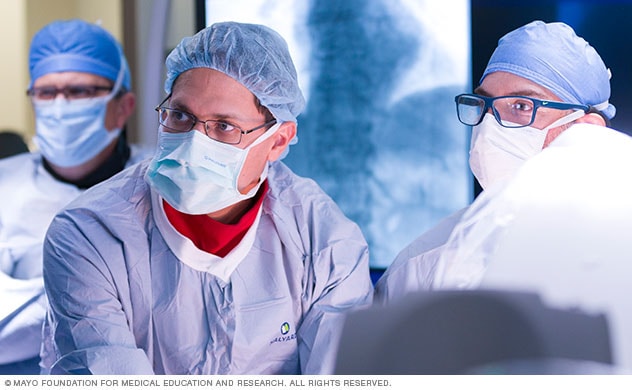
Mayo Clinic vascular surgeons use advanced technology to perform complex stenting procedures.
People with conditions of the blood vessel and lymph systems (vascular diseases) find the right care, the first time, at Mayo Clinic. A vascular center is located at each of the clinic's main campuses in Arizona, Florida and Minnesota. Doctors at the centers diagnose and treat tens of thousands of adults and children each year who have vascular diseases, including many that are serious, rare or complex.
Our multidisciplinary teams bring together experts who work together to develop a care plan for your individual needs. Teams include specialists in vascular and endovascular surgery, heart conditions (cardiovascular medicine), nervous system conditions (neurology), skin conditions (dermatology), imaging (radiology), physical medicine and rehabilitation, rheumatology, blood conditions (hematology), and others as needed.
Our doctors and surgeons are internationally recognized leaders across the spectrum of medical and surgical approaches to vascular disease. Many people come to them with referrals from other medical centers. Mayo Clinic doctors have a broad range of experience that includes comprehensive diagnosis and treatment of aortic disease, aneurysms, collagen disorders (Marfan syndrome and Ehlers-Danlos syndrome), blood vessel dissections, varicose veins (venous insufficiency), blood clots (thrombosis), nutcracker syndrome, peripheral arterial disease, segmental arterial mediolysis, erythromelalgia, Klippel-Trenaunay syndrome and lymphedema. Advanced treatments include medical therapy, carotid artery reconstruction, angioplasty and stenting, bypass surgery, and endovascular interventions.
A team focused on you
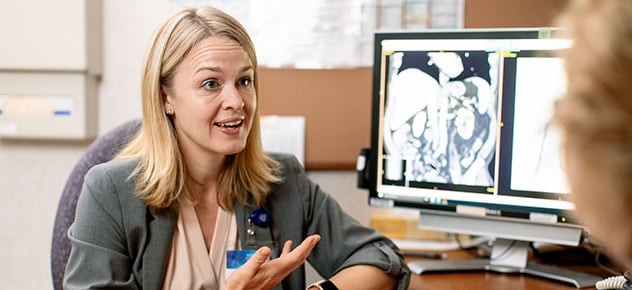 Imaging is key to the right diagnosis
You may meet with a doctor who specializes in advanced vascular imaging (radiology) to discuss your condition.
When you seek care at the vascular centers, everyone on the team is focused on you. This helps ensure better outcomes.
Our team-based, multidisciplinary approach to care means the services you need — such as vascular imaging, the physiology lab, endovascular therapy and surgical services — are easily accessible. Your test results are available quickly, and appointments are scheduled in coordination. What might take months elsewhere can often be done in days here. Your vascular center care team offers resources that can complement the treatment you receive from your primary care doctor.
The doctors, surgeons and interventional radiologists at the vascular centers on Mayo Clinic's campuses in Arizona, Florida and Minnesota provide comprehensive and individualized care to adults and children. Services for children are available at Mayo Clinic in Rochester, Minnesota, through the Gonda Vascular Center and the Children's Center.
Advanced diagnosis and treatment
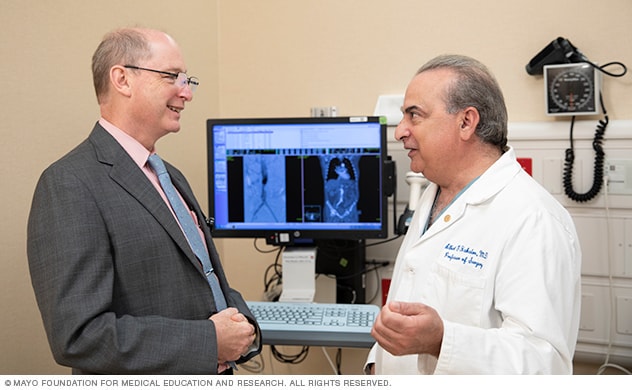
After you undergo advanced, noninvasive diagnostic imaging, your health care team works together to ensure you get the right diagnosis.
Successful treatment starts with an accurate diagnosis. The vascular centers' radiology specialists produce and interpret accurate, high-quality images of the vascular system. You may undergo several tests so that your doctors can identify exactly what's causing your signs and symptoms.
Access to the latest innovative technologies makes all the difference in getting the diagnosis right the first time. The vascular centers use genetic testing and advanced imaging methods, including heart ultrasound (echocardiogram), intravascular ultrasound, magnetic resonance angiography, computerized tomography angiography, cerebral arteriography, electromyography, and arterial and venous ultrasound.
Your doctors will talk with you about your results and treatment options and develop a treatment plan personalized for you. For some people, the best approach is traditional (open) surgery. For others, it may be one of the minimally invasive procedures developed at Mayo Clinic, which studies have shown produce excellent outcomes and rapid recovery. The endovascular and vascular surgical teams use advanced techniques for balloon angioplasty and stenting, blood clot removal, and bypass surgery.
The vascular centers team members offer in-person and virtual consultations.
Nationally recognized expertise
Mayo Clinic campuses are nationally recognized for expertise in cardiology, cardiovascular, and vascular and endovascular surgery:
Mayo Clinic in Rochester, Minnesota, Mayo Clinic in Phoenix/Scottsdale, Arizona, and Mayo Clinic in Jacksonville, Florida, are ranked among the Best Hospitals for heart and heart surgery by U.S. News & World Report. Mayo Clinic Children's in Rochester is ranked the No. 1 hospital in Minnesota and the five-state region of Iowa, Minnesota, North Dakota, South Dakota and Wisconsin, according to U.S. News & World Report's 2025-2026 "Best Children's Hospitals" rankings.
Learn more about Mayo Clinic's quality rankings.
Contact
Arizona
Florida
Rochester