Thumb arthritis Symptoms and causes
Overview
Thumb arthritis is common with aging. The condition happens when cartilage wears away from the ends of the bones that form the joint at the base of the thumb. Cartilage is the strong tissue that connects and protects joints and bone. This joint at the base of the thumb also is called the carpometacarpal joint and the CMC joint.
Thumb arthritis can cause pain and swelling. It can weaken the thumb and keep it from moving as it should. This can make it hard to do simple tasks, such as turning doorknobs and opening jars.
Treatment most often involves both medicine and splints. Sometimes thumb arthritis needs surgery.
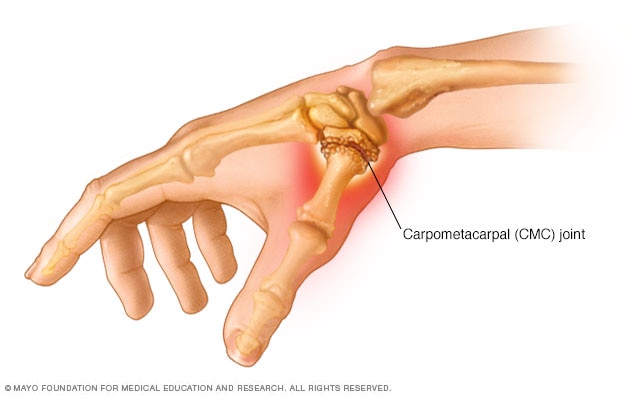
Thumb arthritis
Thumb arthritis occurs when the cartilage in the carpometacarpal (CMC) joint wears away.
Symptoms
Pain is the first and most common symptom of thumb arthritis. Pain can be at the base of the thumb when you grasp or pinch an object.
Other symptoms might include:
- Swelling, stiffness and tenderness at the base of the thumb.
- Less strength when pinching or grasping objects.
- Less range of motion in the thumb.
- The joint at the base of the thumb gets larger or bony.
When to see a doctor
See your healthcare professional if you have swelling, stiffness or pain at the base of your thumb that doesn't go away.
Causes
Thumb arthritis is common with aging. Having had an injury to the thumb joint also can cause thumb arthritis.
The strong tissue that connects and protects joints and bone is called cartilage. Cartilage acts as a cushion. It lets the bones move smoothly against each other.
With thumb arthritis, the cartilage that covers the ends of the bones wears away. Its smooth surface gets rough. The bones then rub against each other, which leads to joint damage.
The damage to the joint might result in the growth of new bone along the sides of the bone that's there. This is called bone spurs. They can cause lumps on the thumb joint.
Risk factors
Factors that can raise the risk of thumb arthritis include:
- Being assigned female at birth.
- Being older than 40 years.
- Having certain conditions that are passed through families. These might include lax joint ligaments or joints that aren't formed correctly.
- Having injuries to the thumb joint, such as fractures and sprains.
- Having conditions such as rheumatoid arthritis that change how cartilage forms and how it works.
- Doing activities and jobs that put high stress on the thumb joints.
From Mayo Clinic to your inbox
Sign up for free and stay up to date on research advancements, health tips, current health topics, and expertise on managing health. Click here for an email preview.
CON-20378325
Mayo Clinic does not endorse companies or products. Advertising revenue supports our not-for-profit mission.
Advertising & Sponsorship
Mayo Clinic Press
Check out these best-sellers and special offers on books and newsletters from Mayo Clinic Press.
