Pilonidal cyst Symptoms and causes
Overview
A pilonidal (pie-low-NIE-dul) cyst is an unusual pocket in the skin that usually contains hair and skin debris. The cyst is almost always near the tailbone at the top of the buttocks.
Pilonidal cysts usually occur when hair punctures the skin and then becomes embedded. If a pilonidal cyst becomes infected, it can be very painful. The cyst can be drained through a small cut in the skin. Sometimes, surgery is needed.
Pilonidal cysts are most common in young adult males, and the problem tends to recur. People who sit for long periods of time are at higher risk of developing pilonidal cysts.
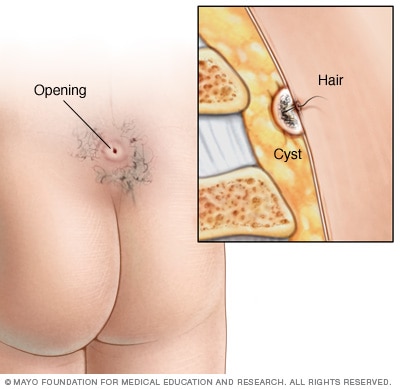
Pilonidal cyst
A pilonidal cyst is an unusual pocket in the skin that usually contains hair and skin debris. A pilonidal cyst is almost always near the tailbone at the top of the buttocks.
Symptoms
A pilonidal cyst may not cause symptoms. But if it's infected, the skin around the cyst may be swollen and painful. Symptoms of an infected pilonidal cyst include:
- A pit near the top of the buttocks crease.
- Pain.
- Inflamed, swollen skin.
- Pus or blood leaking from an opening in the skin.
- An odor from draining pus.
When to see a doctor
If you notice any symptoms of a pilonidal cyst, see your health care provider.
Causes
The cause of most pilonidal cysts is loose hairs that puncture the skin. Friction and pressure from rubbed skin, tight clothing, cycling or long periods of sitting can force hair into the skin.
The body creates a cyst around the hair to try to push it out. Most pilonidal cysts form on the tailbone. People who groom animals or cut hair can develop a cyst between their fingers.
Risk factors
Factors that might increase your risk of a pilonidal cyst include:
- Being a young adult white male.
- Being overweight.
- Having an inactive lifestyle.
- Sitting for long periods at a time.
- Having thick, stiff body hair.
From Mayo Clinic to your inbox
Sign up for free and stay up to date on research advancements, health tips, current health topics, and expertise on managing health. Click here for an email preview.
Complications
Some people have pilonidal cysts that become infected again and again over a long time. Without treatment, these people may be at increased risk of a type of skin cancer called squamous cell carcinoma.
Prevention
To help prevent pilonidal cysts, try to:
- Wash regularly.
- Achieve or maintain a healthy weight.
- Avoid prolonged sitting.
If you've had pilonidal cysts in the past, you might want to regularly shave the affected area or use hair removal products to reduce the risk of a new cyst.
CON-20376313
Mayo Clinic does not endorse companies or products. Advertising revenue supports our not-for-profit mission.
Advertising & Sponsorship
Mayo Clinic Press
Check out these best-sellers and special offers on books and newsletters from Mayo Clinic Press.
