Lichen sclerosus Symptoms and causes
Overview
Lichen sclerosus (LIE-kun skluh-ROW-sus) is a condition that causes patchy, discolored, thin skin. It usually affects the genital and anal areas.
Anyone can get lichen sclerosus but postmenopausal women are at higher risk. It isn't contagious and can't be spread through sexual contact.
Treatment is usually a medicated ointment. This treatment helps return the skin to its usual color and reduces the risk of scarring. Even if your symptoms clear up, they tend to come back. So you'll likely need long-term follow-up care.
Symptoms
It's possible to have mild lichen sclerosus with no symptoms. When symptoms do occur, they usually affect the skin of the genital and anal areas. The back, shoulders, upper arms and breasts may also be affected. Symptoms may include:
- Smooth discolored skin patches
- Blotchy, wrinkled skin patches
- Itching
- Soreness or a burning feeling
- Easy bruising
- Fragile skin
- Changes in the tube for urine flow (urethra)
- Bleeding, blistering or open sores
- Painful sex
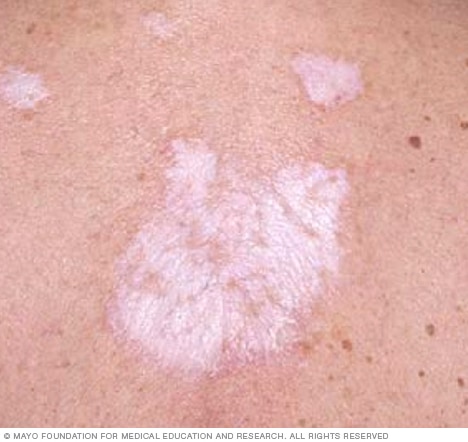
Lichen sclerosus
Lichen sclerosus is a skin condition characterized by discolored, blotchy patches of skin.
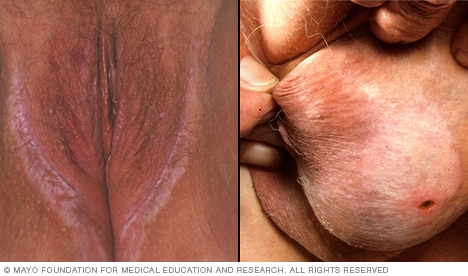
Lichen sclerosus in genital area
Lichen sclerosus may affect skin on any part of your body but often involves the skin of the genital area.
When to see a doctor
See your health care provider if you have symptoms of lichen sclerosus.
If you've already been diagnosed with lichen sclerosus, see your health care provider every 6 to 12 months. These visits are important to check for any skin changes or side effects of treatment.
Causes
The exact cause of lichen sclerosus isn't known. It's likely a combination of factors, including an overactive immune system, your genetic makeup, and previous skin damage or irritation.
Lichen sclerosus isn't contagious and can't be spread through sexual contact.
Risk factors
Anyone can get lichen sclerosus, but the risk is higher for:
- Postmenopausal women
- Children younger than 10 years old
- Women who have another autoimmune disease, such as forms of low thyroid function (hypothyroidism)
- Men with urinary incontinence or an uncircumcised penis
- People with a family history of the disease
From Mayo Clinic to your inbox
Sign up for free and stay up to date on research advancements, health tips, current health topics, and expertise on managing health. Click here for an email preview.
Complications
Complications of lichen sclerosus include painful sex and scarring, including covering of the clitoris. Scarring of the penis can cause painful erection, poor urine flow and an inability to retract the foreskin.
People with vulvar lichen sclerosus are also at an increased risk of squamous cell carcinoma.
In children, constipation is a common complication.
CON-20374435
Mayo Clinic does not endorse companies or products. Advertising revenue supports our not-for-profit mission.
Advertising & Sponsorship
Mayo Clinic Press
Check out these best-sellers and special offers on books and newsletters from Mayo Clinic Press.
