Overview
Ehrlichiosis (ar-LIK-e-o-sis) and anaplasmosis (ana-plas-MO-sis) are illnesses from tick bites. These illnesses also are called tick-borne illnesses. They cause flu-like symptoms such as fever, muscle aches and headache. Symptoms most often appear within 14 days after a tick bite.
Quick treatment with the right antibiotic can make symptoms better within a few days. If not treated, ehrlichiosis and anaplasmosis can cause serious or life-threatening complications.
The best way to prevent these infections is to not get tick bites. Use a substance to keep ticks away, called tick repellent. Do full-body checks after being outside and remove ticks the right way.
Products & Services
Symptoms
Symptoms of ehrlichiosis and anaplasmosis most often are the same. But symptoms of ehrlichiosis may be worse. Symptoms, which vary from person to person, may include:
- Fever.
- Chills.
- Headache.
- Muscle aches.
- Not feeling well.
- Joint pain.
- Upset stomach.
- Vomiting.
- Loose stools.
- Not wanting to eat.
Other symptoms linked with ehrlichiosis but rarely with anaplasmosis include:
- Confusion or changes in mental state.
- Rash.
Some people may be infected and not get symptoms.
When to see a doctor
If you get any symptoms of illness after a tick bite or after being around ticks, see your healthcare professional. It can take up to 14 days for symptoms to appear.
Causes
Lone Star tick

Lone Star tick
The adult female Lone Star, also called Amblyomma americanum, tick has a white spot on the back. The Lone Star tick is mainly found in the Southern and Eastern United States.
Deer tick
Deer tick
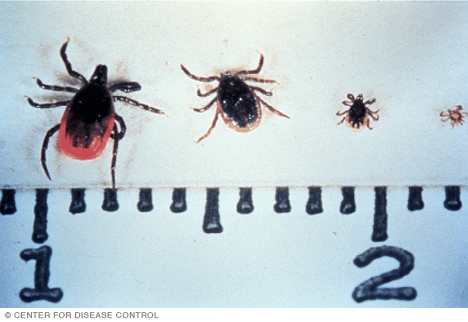
The deer tick, also called the black-legged tick and Ixodes scapularis, is mainly found in eastern half and Midwest region of the United States.
Different types of bacteria cause ehrlichiosis and anaplasmosis. The bacterium Ehrlichia chaffeensis causes ehrlichiosis. The Lone Star tick is the main carrier of this bacteria.
The Lone Star tick lives in south-central, southeastern and eastern coastal states. Black-legged ticks, also called deer ticks, are less common carriers.
The bacterium Anaplasma phagocytophilum causes anaplasmosis. Deer ticks carry this bacterium. The ticks live in the Upper Midwest, northeastern states and central Canada. The Western black-legged tick in Western coastal states and other tick species in Europe and Asia also carry it.
Tick bites and infection
Ticks feed on blood. They attach themselves to a host and feed until they swell to many times their size. Ticks can pick up bacteria from a host, such as a deer, and then spread the bacteria to another host, such as a human. The spread of the bacteria from the tick to the host most likely happens about 24 hours after the tick has begun feeding.
Other ways bacteria spread
The bacteria that cause ehrlichiosis or anaplasmosis also can spread through donor blood or organs, from a pregnant person to an unborn baby, also called a fetus, or through contact with an infected animal that's been killed.
Related information
Guide to different tick species and the diseases they carry
Risk factors
The main risk factor for the tick bites that cause ehrlichiosis and anaplasmosis is spending time in grassy, wooded or bushy areas where ticks live. Other factors that increase the risk of a tick bite include:
- Being outdoors in warm spring and summer months.
- Gardening, camping, hiking, golfing or hunting in grassy areas.
- Not wearing clothes that cover all your skin while in areas where there are ticks.
- Having a pet that has ticks.
Complications
Without fast treatment, ehrlichiosis and anaplasmosis can have serious effects. People with weakened immune systems are at a higher risk of more-serious and life-threatening complications.
Complications of an infection that isn't treated may include:
- Kidney failure.
- Lung failure.
- Heart failure.
- Damage to the central nervous system.
- Seizures.
- Coma.
- Other serious infections.
Prevention
The best way to prevent ehrlichiosis or anaplasmosis is to not get tick bites. If you plan to work or play in an area that is likely to have ticks, follow these tips to protect yourself.
Mayo Clinic Minute: Ways to avoid ticks
Jeff Olsen: While you're enjoying a hike, ticks are looking for a ride.
Dr. Bobbi Pritt: They get themselves in a position. And they will climb up the nearest object, like this blade of grass here.
Jeff Olsen: It's called questing.
Dr. Bobbi Pritt: It sticks out its legs, and that allows it to grab on to hosts as they walk by.
Jeff Olsen: You can lessen the chances you'll become a host.
Dr. Bobbi Pritt: Using insect repellents is a good idea.
Jeff Olsen: Mayo Clinic parasitic diseases expert Dr. Bobbi Pritt suggests permethrin for your clothing and gear.
Dr. Bobbi Pritt: You can really saturate your gear. Leave them out to dry, and, then, the next day, wear them.
Jeff Olsen: Use permethrin on materials and DEET on skin. Spray the DEET repellent on exposed skin, including your legs and hands. Avoid your face, but be sure to protect your neck. Then, tuck your pants into your socks. And, on your hike, remember to avoid areas where those questing ticks may be perched.
Dr. Bobbi Pritt: That's why you want to stay away from the tall grasses. Stay in the middle.
Jeff Olsen: For the Mayo Clinic News Network, I'm Jeff Olsen.
Use substances that keep ticks away, called tick repellents
- Spray your outdoor clothing, shoes, tent and other camping gear with a repellent that has 0.5% permethrin. Or buy gear and clothing that has been treated with permethrin.
- Use an insect repellent registered with the U.S. Environmental Protection Agency on all exposed skin except your face. Registered repellents include those that have DEET, picaridin, IR3535, oil of lemon eucalyptus, also called OLE, para-menthane-diol, also called PMD, or 2-undecanone.
- Do not use products with OLE or PMD on children younger than 3.
Dress for protection
- Wear light-colored clothing that makes it easier to see ticks before they bite.
- Don't wear open-toed shoes or sandals.
- Wear long-sleeved shirts tucked into your pants and long pants tucked into your socks.
Check for ticks
- Shower as soon as you can to wash off loose ticks and check for ticks that may have attached.
- Use a mirror to check your whole body. Check your underarms, hair and hairline, ears, waist, between your legs, behind your knees, and inside your belly button.
- Check your gear. Put your clothes and gear in a hot dryer for at least 10 minutes to kill ticks. Use hot water to wash anything that needs to be washed.
Other tips
- Look for ticks every day on pets that spend time outdoors.
- Stay on cleared paths as much as you can in wooded and grassy areas.