Ectropion Symptoms and causes
Overview
Ectropion (ek-TROH-pee-on) is a condition in which your eyelid turns outward. This leaves the inner lining of the eyelid surface exposed and limits protection of the eye.
Ectropion generally affects only the lower eyelid. The entire length of the eyelid may be turned out, or only one part of the eyelid may sag away from the eye.
The condition is more common in older adults.
Artificial tears and lubricating ointments can help relieve symptoms of ectropion. Surgery is needed to fully correct the condition.
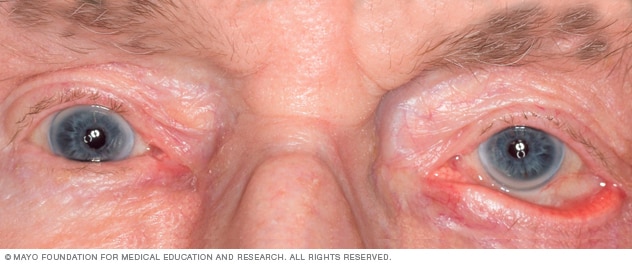
Ectropion
In ectropion, the lower lid sags away from the eye. Because of the sagging lid, your eye can't close completely when you blink, which can cause the eye to be dry and irritated.
Symptoms
Blinking allows the eyelids to spread tears evenly across the eyes. This keeps the surfaces of the eyes lubricated and clean. The tears drain into small openings on the inner part of the eyelids.
With ectropion, the lower lid pulls away from your eye. The eyelids don't close all the way, causing poor lubrication and cleaning of the eyes. Also, tears don't drain properly. These changes in how the eyelid works can cause the following symptoms:
- Watery eyes.
- Excessive dryness of the eye.
- Burning, gritty or sandy feeling in the eye.
- Redness of the white of the eye and the lining of the eyelid.
- Sensitivity to light.
When to see a doctor
See your healthcare professional if an eyelid is sagging or an eye is constantly watering or irritated.
Seek immediate care if you experience:
- Pain or achiness in the eye.
- Increased pain with exposure to light.
- Decreased vision.
These symptoms could indicate severe injury to the eye, including injury to the clear outer layer at the center of the eye, called the cornea.
Causes
Ectropion can be caused by:
- Muscle weakness. With age, the muscles under the eyes tend to weaken, and tendons stretch out. These muscles and tendons typically hold the eyelid snugly against the eye. When the muscles and tendons weaken, the eyelid can begin to droop.
- Facial paralysis. Certain conditions, such as Bell's palsy, can paralyze facial nerves and muscles that control the eyelids.
- Scar tissue. Ectropion may be caused by scar tissue or tightened tissues after a burn, injury, skin disease or previous eyelid surgery.
- Eyelid growths. A cancerous or noncancerous tumor on the eyelid can cause it to turn outward.
- Glaucoma medicines. Ectropion may be a side effect of long-term use of certain medicines used to treat an optic nerve condition called glaucoma.
- Congenital condition. Rarely, ectropion is related to a condition present at birth, also called a congenital condition.
Risk factors
Factors that increase your risk of developing ectropion include:
- Older age.
- Previous eyelid surgeries.
- Previous cancer, burns or trauma near the eyes.
- Skin conditions near the eyes.
- Frequently rubbing eyes.
- Frequently pulling on eyelids as when putting in contact lenses.
Complications
Ectropion leaves your cornea irritated and exposed. This can lead to:
- Scratching or other damage to the cornea.
- Eye infections.
- Ulcers on the cornea.
- Ongoing inflammation of the cornea.
- Inflammation, thickening or toughening of the inner eyelid.
CON-20155453
Mayo Clinic does not endorse companies or products. Advertising revenue supports our not-for-profit mission.
Advertising & Sponsorship
Mayo Clinic Press
Check out these best-sellers and special offers on books and newsletters from Mayo Clinic Press.
