
Overview
Bad breath, also called halitosis, can be embarrassing and in some cases may even cause anxiety. It's no wonder that store shelves are overflowing with gum, mints, mouthwashes and other products to fight bad breath. But many of these products are only short-term measures. That's because they don't address the cause of the problem.
Certain foods, health conditions and habits are among the causes of bad breath. In many cases, you can make bad breath better by keeping your mouth and teeth clean. If you can't solve bad breath yourself, see your dentist or another healthcare professional to be sure a more serious condition isn't causing it.
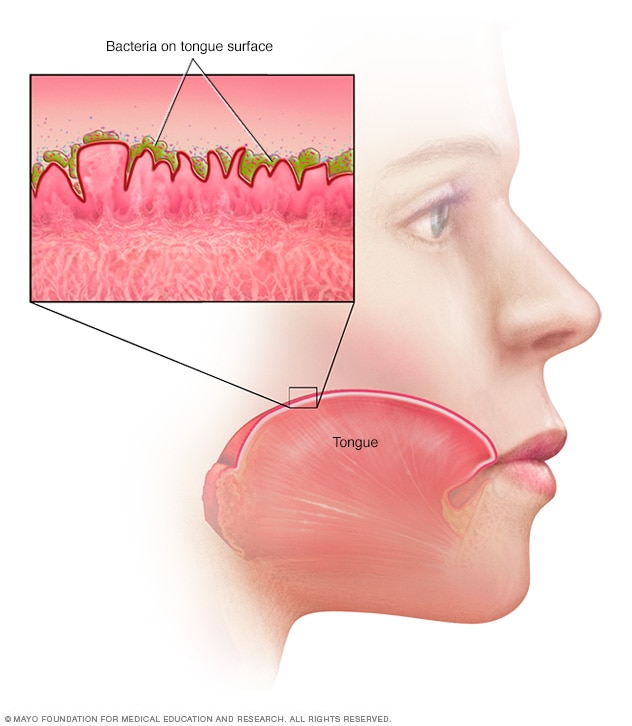
Halitosis
The uneven surface of the tongue can trap bacteria that produce odors, leading to bad breath.
Symptoms
Bad breath odors vary, depending on the cause. Some people worry too much about their breath even though they have little or no mouth odor. Others have bad breath and don't know it. Because it's hard to know how your breath smells, ask a close friend or relative to confirm if you have bad breath.
When to see a doctor
If you have bad breath, review how you keep your mouth and teeth clean. Try making lifestyle changes, such as brushing your teeth and tongue after eating, using dental floss, and drinking plenty of water.
If you still have bad breath after making changes, see your dentist. If your dentist thinks a more serious condition is causing your bad breath, you may need to see another healthcare professional to find the cause of the odor.
Causes
Most bad breath starts in your mouth. There are many possible causes, including:
- Food. The breakdown of food particles in and around your teeth can lead to more bacteria and cause a foul odor. Eating certain foods, such as onions, garlic and spices, also can cause bad breath. After you digest these foods, they enter your bloodstream, are carried to your lungs and affect your breath.
- Tobacco products. Smoking causes unpleasant mouth odor. Tobacco users also are more likely to have gum disease, which is another source of bad breath.
- Not keeping your mouth and teeth clean. If you don't brush and floss daily, food particles remain in your mouth, causing bad breath. A colorless, sticky film of bacteria called plaque forms on your teeth. If not brushed away, plaque can irritate your gums. Eventually, it can form plaque-filled pockets between your teeth and gums. The early stage of gum disease is known as gingivitis. Late-stage gum disease with bone loss is called periodontitis. Your tongue also can trap bacteria that produce odors. Dentures also can collect odor-causing bacteria and food particles, as can fixed or removable oral appliances such as braces that aren't cleaned regularly or don't fit properly.
- Dry mouth. Saliva helps cleanse your mouth, removing particles that cause bad odors. A condition called dry mouth or xerostomia (zeer-o-STOE-me-uh) can be a part of bad breath because you produce less saliva. Dry mouth naturally occurs during sleep, leading to "morning breath." It gets worse if you sleep with your mouth open. Constant dry mouth can be caused by a problem with the glands that produce saliva and by some diseases.
- Medicines. Some medicines can lead to bad breath by causing dry mouth. The body breaks down other medicines and releases chemicals that can be carried on your breath.
- Infections in your mouth. Surgical wounds after mouth surgery, such as tooth removal, as well as tooth decay, gum disease or mouth sores, can cause bad breath.
- Other mouth, nose and throat conditions. Small stones that form in the tonsils, called tonsil stones or tonsilloliths, are covered with bacteria that can cause bad breath. Infections, or constant swelling in the nose, sinuses or throat, can lead to postnasal drip. This is when fluid from your nose runs down the back of your throat. This condition also can cause bad breath.
- Other causes. Diseases such as some cancers can cause a distinctive breath odor. The same is true for disorders related to the body's process of breaking food down into energy. Constant heartburn, which is a symptom of gastroesophageal reflux disease or GERD, can lead to bad breath. A foreign body, such as a piece of food lodged in a nostril, can cause bad breath in young children.
Risk factors
Your risk of bad breath is higher if you eat foods known to cause bad breath, such as garlic, onions and spices. Smoking, not keeping your mouth clean and some medicines also can play a part, as can dry mouth, infections of the mouth and some diseases. In addition, other conditions such as GERD or cancer can lead to bad breath.