-
Featured News
Strong Performance in 2015, Extending Hope and Healing to Millions
Share this:





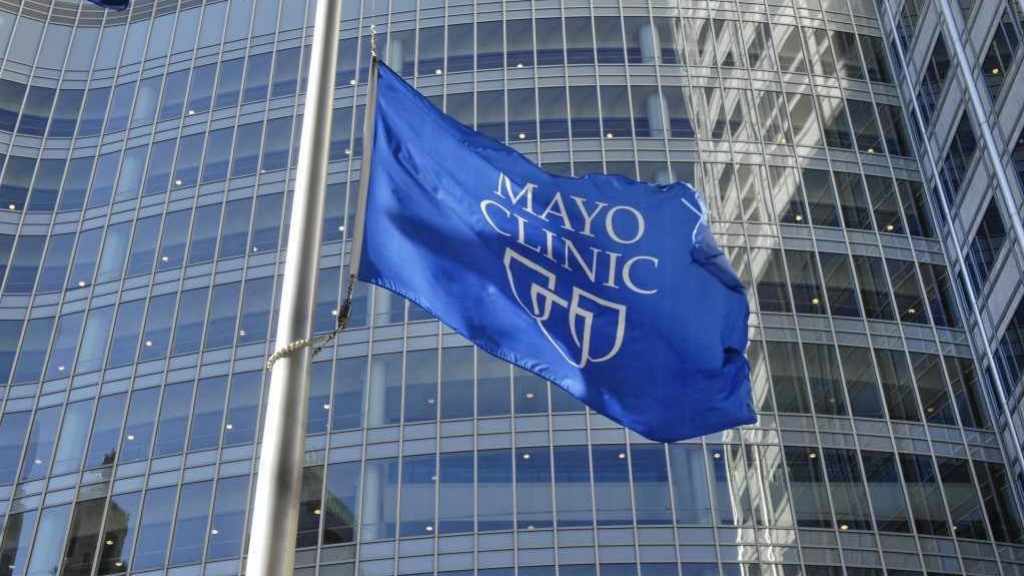
ROCHESTER, Minn. — Providing direct care for more than 1.3 million people, Mayo Clinic continues to advance its mission to be a trusted source for clinical quality, medical education and research discoveries that improve lives.
Mayo Clinic reported a strong financial position in 2015, with contributions of $505 million to its pension plan for employees and more than $600 million in capital projects.
“When we look at these numbers, we see people — our patients and our dedicated employees,” says John Noseworthy, M.D., president and CEO, Mayo Clinic. “We believe Mayo Clinic has a moral responsibility to provide compassionate care to patients who put their trust in us. We’re not just treating a symptom; our team of experts delivers a seamless, integrated experience that patients expect. Our results solidify our ability to deliver complex care to our patients and provide a secure future for our staff.”
For more than 20 years, Mayo Clinic has led the way in U.S. News & World Report rankings, with more No. 1 ranked specialties than any other hospital in the nation. In 2015, Mayo Clinic ranked first, second and third in all 12 data-driven specialties of U.S. News & World Report’s Best Hospitals rankings.
MEDIA CONTACT: Susan Barber Lindquist, Mayo Clinic Public Affairs, 507-284-5005, newsbureau@mayo.edu.
“We thank our teams of employees for their respect, integrity, compassion and innovation,” says Jeff Bolton, vice president, Administration, Mayo Clinic. “Their strong focus on our patients and mission anchors us in the Mayo Clinic values that define us.”
Besides providing in-person care through its destination centers and integrated community care model Mayo Clinic Health System, Mayo continues to share its knowledge and provide virtual consultations to providers and patients through Mayo Clinic Care Network, its international network of member practices. With the addition of seven members in 2015, the Mayo Clinic Care Network now has more than 35 members based in the continental U.S., Mexico Puerto Rico and Singapore. These independent organizations represent more than 100 hospitals. Through them, nearly 10 million patients and their care teams have access to Mayo Clinic knowledge, clinical protocols and consultations.
The Center for Connected Care continues to expand Mayo Clinic’s reach. More than 16,000 telemedicine consultations across the institution, including eConsults, telestroke and video consults, were conducted in 2015. Also, almost 800,000 Mayo Clinic patients have Patient Online Services accounts providing them access to their medical record, lab results, appointment itineraries and secure messaging to their health care teams through Web and a mobile app.
“I am confident in our people and direction,” says Dr. Noseworthy. “We work together so patients continue to find hope and healing at all of our campuses.”
Extending Mayo Clinic care, information and guidance to people everywhere
From cancer care to training new doctors, Mayo Clinic continues to transform medical practice:
- The Mayo Clinic Proton Beam Therapy Program, housed in the Richard O. Jacobson Building in Rochester, began treating patients with cancer in June 2015. On Mayo Clinic’s Arizona campus, the Proton Beam Therapy Program – part of the new Mayo Clinic Cancer Center– will begin treating patients in mid-March. Other capital projects were announced in January 2016.
- Mayo Clinic and United Therapeutics Corporation announced a collaborative project in 2015 on a lung restoration center to be built on Mayo Clinic’s Florida campus. The goal is to significantly increase the volume of lungs for transplantationby preserving and restoring selected marginal donor lungs, making them viable for transplantation. The restored lungs will be made available to patients at Mayo Clinic and other transplant centers throughout the U.S. Mayo Clinic is the largest provider of solid organ transplants in the U.S. and performs more transplants at its Arizona, Florida and Minnesota campuses combined than any other medical center in the nation.
- The 2015 incoming class of Mayo Medical School will be the first medical students nationwide to receive a Science of Health Care Delivery certificate in addition to a medical degree. The integrated curriculum is part of an initiative to better prepare students for the challenges of delivering patient care in a complex health care environment.
- Mayo Clinic Square opened in Minneapolis in 2015 as the new headquarters of the Minnesota Timberwolves and Minnesota Lynx. It also is home to Mayo Clinic Sports Medicine.
Supporting local community vibrancy, economic development and health needs
Mayo Clinic serves as an active participant in its communities:
- Leveraging the global reputation and significant commitment of Mayo Clinic, Destination Medical Center (DMC) will enhance the patient experience and further elevate Minnesota as the world’s premier destination for health and wellness. DMC aims to draw patients and visitors to Minnesota, attract people, investments and jobs and stimulate additional growth of the state’s biosciences sector. In 2015, Mayo Clinic added $600,000 to its already $8 million investment in DMC and thousands of hours of employee time.
- Mayo Clinic contributed $6.6 million in cash and in-kind support to local community needs, community wellness initiatives and outreach to the most vulnerable citizens.
- Mayo Clinic provided $548.5 million in care to people in need. In 2015, this total included $72.7 million in charity care and $475.8 million in unpaid portions of Medicaid and other indigent care programs for people who are uninsured or underinsured.
Advancing the future of health care through research, education and thought leadership
The Center for Individualized Medicine, Center for Regenerative Medicine and Robert D. and Patricia E. Kern Center for the Science of Health Care Delivery, as well as its multisite Mayo Clinic Cancer Center and medical research across all departments and sites, continue to keep Mayo Clinic at the leading edge of scientific discovery and innovations in patient care:
- A $13.3 million, five-year federal grant, the Breakthrough Award from the U.S. Department of Defense’s Breast Cancer Research Program, will test a vaccine designed to prevent the recurrence of triple-negative breast cancer, a subset of breast cancer for which there are no targeted therapies.
- A $6.8 million grant from the National Institutes of Health (NIH) to develop intelligent devices to treat people with epilepsy through the Brain Research Through Advancing Innovative Neurotechnologies (BRAIN) Initiative.
- A $5.3 million NIH grant to identify vascular risk factors in aging and dementia, and translate knowledge into treatment. The grant is one of the first given for the National Alzheimer’s Project Act.
- Total Research and Education funding in 2015 was $946 million, reflecting $506 million in reinvestment by Mayo Clinic and $440 million from external sources.
- Mayo Clinic is a recognized thought leader, sought in 2015 for input on health care-related topics during the Aspen Ideas Festival, Davos World Economic Forum and numerous local, national and international media outlets.
2015 Mayo Clinic financial report
“Our strong financial position is the direct result of our work to redesign the medical practice and our disciplined financial stewardship,” says Kedrick Adkins Jr., chief financial officer, Mayo Clinic. “As the health care environment continues to change, we are optimistic we will continue to secure Mayo Clinic’s position as the global leader in health care.”
2015 financials include:
As anticipated, Mayo Clinic’s overall financial performance decreased in 2015 relative to the record performance in 2014, which had achieved the highest operating margin since 1986.
- Mayo Clinic finished 2015 with $526.4 million in income from current activities — or net operating income — which translates to an operating margin of 5.1 percent. Mayo Clinic targets a 5 percent annual operating margin to support its research and education missions, fund salary increases, invest in the pension fund, and provide a source of capital for investing in the future.
- Revenues grew by 5.7 percent to $10.3 billion.
- Benefactors, primarily grateful patients, contributed $277 million to fund Mayo Clinic programs in Practice, Education and Research.
- Mayo Clinic contributed $505 million into the employee pension plan in 2015 as a continued commitment to employees.
- Mayo Clinic capital expenditures exceeded $600 million in 2015. These expenditures are part of a multiyear plan to continue to invest in state-of-the art equipment, facilities and technology, which includes a new electronic health record and revenue cycle management system, network infrastructure and security upgrades.
Additional resources:
Mayo Clinic Consolidated Financial Report, December 31, 2015
Mayo Clinic Operational Performance 2011-2015
###
About Mayo Clinic
Mayo Clinic is a nonprofit organization committed to medical research and education, and providing expert, whole-person care to everyone who needs healing. For more information, visithttp://www.mayoclinic.org/about-mayo-clinic or https://newsnetwork.mayoclinic.org.
Related Articles